July was another good month for the stock market and the federal
Thrift Savings Plan (TSP).
All of the TSP funds had a positive return in July. The biggest gain came
with the I fund which was up 9.74%. It is now up 16.99% for the year. The S and
C funds also did very well moving up 8.66% and 7.58% respectively.
This is the fifth month in a row for positive returns from your TSP
investments. (Here
are the monthly returns for all of the TSP funds for 2009.) The widely
followed Dow Jones Industrial Average was up 8.6% for the month which is its
best monthly performance since October 2002. It was the best July for the Dow in
percentage terms since 1989.
The S&P 500 (the index on which the TSP's C fund is based) was up 7.4% in
July and it has risen 34.33% in five months, its best five-month span since
October 1938.
While your stock investments are recovering, it is also a good idea to put
the recent gains into perspective. The recent surge in stock prices is certainly
good news. But, to put something of a damper on your enthusiasm, check out the
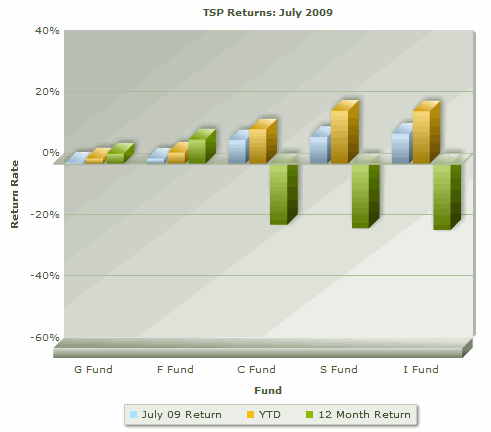
returns in the five underlying stock funds over the past twelve months. Here is
a chart that displays these returns. (To see the specific percentages, just
scroll your cursor over the bar you wish to display the results.)
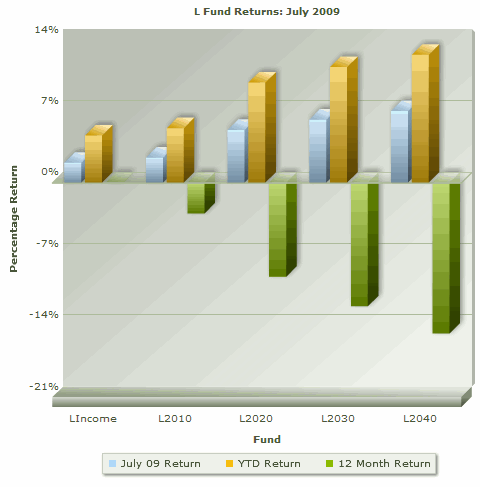
The results for the lifecycle funds show a similar trend. All of the L funds
have a negative return for the past twelve months. And all of the L funds have a
positive return for July and for the year-to-date.
What the charts make apparent is that the funds with the biggest recent gains
are also those with the largest losses over the past twelve months.
The dramatic difference in results shows the advantage of diversifying your
TSP investments. No one can accurately predict whether the current trend in
stocks will continue and quickly turn the 12 month losses into gains--perhaps
even sizable gains. There is certainly the possibility of a pullback after the
market having gone up so dramatically.
The stock market usually looks ahead--or at least stock investors try to
invest based on future events. The looming national debt and the high
unemployment rate of about 10% are likely to give some investors pause and could
well put a damper on the markets continuing to go up at their current rate.
If you are early in your federal career, this is probably a great time to
invest and to take some risk as any downturn is likely to be largely forgotten
when you retire in 25 years or so. But, if you are retired or getting close to
retirement, you will probably want to hedge your bets somewhat by keeping a
portion of your investments in the safer G and F funds unless you are prepared
(and financially able) to withstand any downturn that may occur in the market
while trying to cash in on potential gains that may still be in the offing prior
to the time you may need the money.
To get a longer-term perspective on the TSP rates of return, check out the
yearly return rates for the TSP funds.
© 2009 FedSmith Inc. All rights reserved. This article may not be reproduced without express written consent of FedSmith Inc.